Has sustainability certification failed us? Scott Poynton thinks so, and explains why
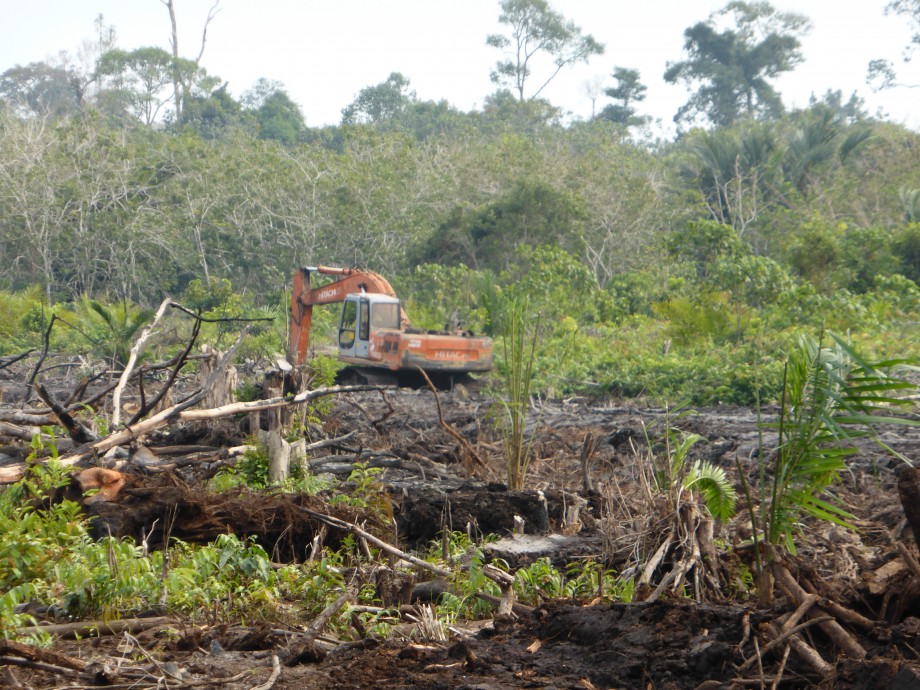
Many readers who work in forestry or palm oil will know Scott Poynton, and his organisation, the Forest Trust, now known as TFT.
They are in some ways, a new model of sustainability organisation, a non-profit company with corporate members, any of which they are not afraid to suspend if needed. So not a pure play NGO, membership group or consulting outfit. Rather, a hybrid of the three.
This model and TFT’s work, is not without some controversy or question from some. In keeping with this desire to shake things up a little, to be a little radical, are Scott’s views on sustainability certification, its failings and some solutions.
He’s written a short, very readable book on all this, which you can, and should, download here at no cost.
I sent him some questions about the book and its suggestions. (I should disclose here that whilst I don’t agree with Scott about everything, we chat a lot on Skype or in person, about various subjects, and have constant robust debate, which I enjoy and value)
I’ve long had the view that in the sustainable business world, there is far too much ‘safe talk’, badging incrementalism as ‘transformation’, or using even more opaque jargon to celebrate tiny changes, or unscalable guilt-funded pilot projects.
Working in sustainable business has become a career rather than a vocation for most. This is fine and as it should be. We need professionals. But the flipside of ‘sustainability professionals’ is the personal fear these managers may feel of career shortening radical ideas or risk taking.
So we need people who speak out, and ask the difficult questions, often those queries that others find too political compromising to air, but feel themselves.
This is why our company, Innovation Forum, exists. To ask difficult questions of all, and to try and help find solutions.
TFT’s work and Scott’s desire to shake things up, then, chime well with that. One of the reasons he and I get along.
So given all that, I’ve tried to ask Scott some fairly robust, even borderline aggressive, questions about his views on certification, below.
Here’s what Scott had to say:
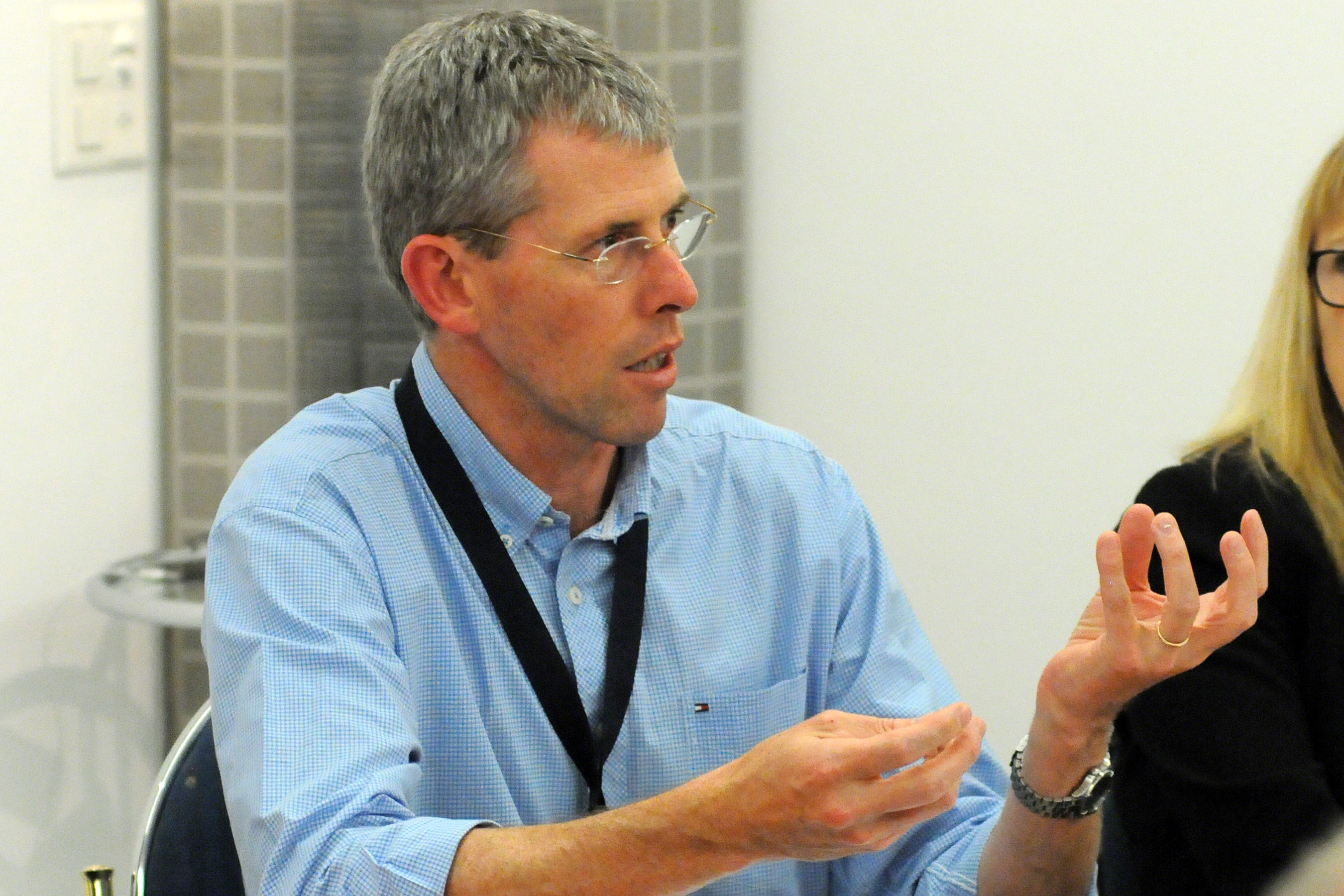
Scott Poynton
TW: You are very critical of FSC and RSPO certification. Why?
SP: “I’m critical of certification as a whole but I have most personal experience of FSC and RSPO so I do speak a lot about them because they’re what I’m most familiar with.
I’ve read about MSC and other certification schemes and the problems I highlight do appear across the board.”
TW: What’s your solution? Aren’t you just a ‘non-profit’ consultant peddling your own solutions?
SP: “I describe where we’ve gotten to in our thinking in the book. We’ve been in this space for many years now.
We tried certification but found that forests continued to go up in smoke and people continued to have their rights ignored and livelihoods destroyed.
Other natural resources are getting trashed too. Certification isn’t doing it. So we started to think and evolve.
Our Values Transparency Transformation Verification (VT TV) model is where we’ve gotten to so far. The evolution continues.
I’m not arguing that it is the answer; I’m putting it out there to show where we’ve reached. I hope that will stimulate others to go further.
We’ve been accused of writing the book to push our brand, for PR, in ‘self-interest’. That’s an unhappy charge I think; it’s a cheap shot. “No need to listen to their views because they’re just promoting themselves”.
That’s a shame and the debate we tried to kindle through the book deserves a better response.
The book doesn’t push TFT. It was written to stimulate thought, debate and most importantly innovation because my strong view is that certification closes minds and kills innovation.
We need innovation to deal with the challenges we’ve created for ourselves so the book’s purpose is to get that thinking and innovation happening. It’s not time for laments, it’s time for concerted action and everything we’ve seen from our work suggests that positive results can come if we free ourselves from the bounds of certification.”
In need of a rethink? Maybe
TW: And where’s your evidence that your approach can go beyond where certification is? And anyhow surely your work wouldn’t be possible without certification providing a base, so aren’t you biting the hand that feeds?
SP: “If you look at the policies that TFT members are implementing, you’ll see how far they’ve gone beyond certification schemes. Others are following and it’s unleashed a huge wave of innovation.
New processes like the High Carbon Stock Approach are being developed and TFT members are pushing frontiers with older approaches around transparency, Free, Prior and Informed Consent, peatland conservation and verification.
This is a breath of fresh air. No issue is off the table and we don’t need to have workshops and drawn out standard review processes to get new ideas incorporated and tested in the field.
3M is a great example where they got feedback from NGOs that conserving Intact Forest Landscapes (IFLs) was really important. The 3M folk agreed and bang, it was in their Paper Sourcing Policy the next day.
Getting IFLs accepted into the FSC standard is celebrated as a success of multi-stakeholder standard setting processes but it took years and in the end only applies to those operations seeking FSC certification.
3M is implementing its policy across its entire supply base, whether forest operations are FSC or not. That’s taking impact to a scale that certification schemes can never achieve.
We don’t need certification as a base. Back in 1993, when folk sat down to develop the FSC, they could have developed VT TV, or some other values based approach.
All the successes that certification schemes celebrate could have, and I believe would have happened by people just following their fundamental values.
Indeed, I would argue that they could have happened exponentially faster had we developed a values based approach from the start. VT TV and any other values based models don’t need certification. Certification schemes hold us all back.
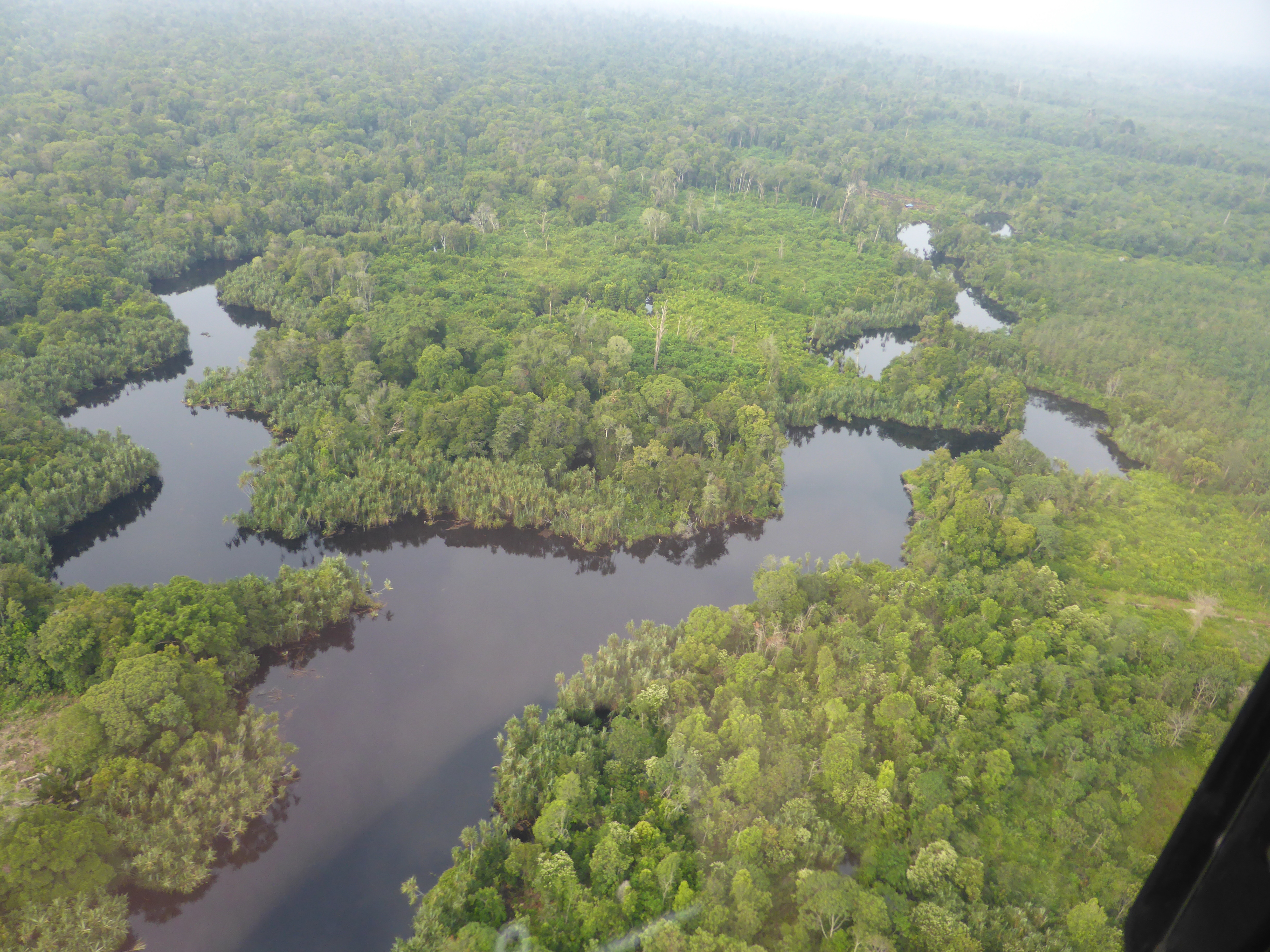
Where the rubber meets the road. (photo by the author, Riau, Sumatra 2014)
Just to be clear, TFT still helps operations we work with to achieve certification but only as a way of marking a milestone on their journey.
You’ve reached this point, if you want to get a piece of paper to prove it, go ahead, but keep going, especially beyond weak standards.”
TW: This VT-TV model. Describe it briefly, and tell us, what happens when suppliers, or companies held back by investors, don’t want to, or feel they can’t do it? At least certification fits into conventional business processes…
SP: “Certification certainly does fit into conventional business processes which, sadly, is part of the reason why the planet is in such a mess.
We’ve designed a tool that doesn’t bring fundamental change; it merely extends us somewhat from business as usual.
VT TV starts by companies working out what they fundamentally believe. Do you want to be linked to deforestation (for example)? No? OK, so don’t be. Put it in your values statement.
Do you want to be linked to worker exploitation? No? OK, don’t be. Put it in your values statement. By talking to a broad range of stakeholders – NGOs, experts, industry peers, family – company leaders can get a rapid overview of the issues they’re facing and shared thoughts on how best to tackle them.
It’s truly multi-stakeholder and it’s very powerful because the resulting values statement is something the company holds dearest to its heart.
Once you’ve got that, you need to find out how you’re doing. Get to the field to work out where your raw materials or services come from. What’s happening there? Is there deforestation? Are workers being mistreated? Etc. Traceability is key here so you might need some innovation to work out where your product comes from.
Once you’ve done this, you’ll have a good overview of where you stand against your values. Make that public – that’s what T for Transparency is all about. You’ll get great feedback when you do.
Transformation means getting out there and sorting out the places where your current operations or supply are not aligned with your values. You can switch suppliers but better to engage with them to help them transform. It’s more fun and you’ll be having a positive impact.
Patchy record at best
Change is tough so this is the hardest part of the process but hang in there, it’s also the most rewarding as you see your values helping others to move and have impact. And you can work with NGOs and others to support you.
Then comes Verification. Get someone who is truly independent to get out there and have a look to let you know how they think you’re doing.
The approach we use for certification today is lauded as 3rd party independent. For me, it’s nothing of the sort; auditors are paid by those they’re auditing. That’s not independent.
This is the biggest bright shining lie of the certification movement and it causes a lot of problems.
So instead, we’re seeking ways to get independent local NGOs engaged in the verification work. They’re already doing it in fact. It’s how they feed information into campaigns. Let’s strengthen their work in this area and we’ll get much more credible and more instant feedback from the field.
If companies don’t want to go down this route, try to persuade them. If they point blank refuse, for whatever reason, yes, perhaps their investors don’t want it or perhaps their values aren’t aligned with yours, then in the end, you’ll have to make the tough decision to move suppliers.
That’s not easy but it’s seldom impossible and if enough of the supplier’s customers ask for the same thing, then it’ll make their position difficult. If banks and investors ask for it too, as we’re increasingly seeing, then change might start to look more interesting. We’re seeing this in the palm oil industry and other industries too.
It is happening and if more of us push the envelope based on good human values, we’ll take change to scale very rapidly.”
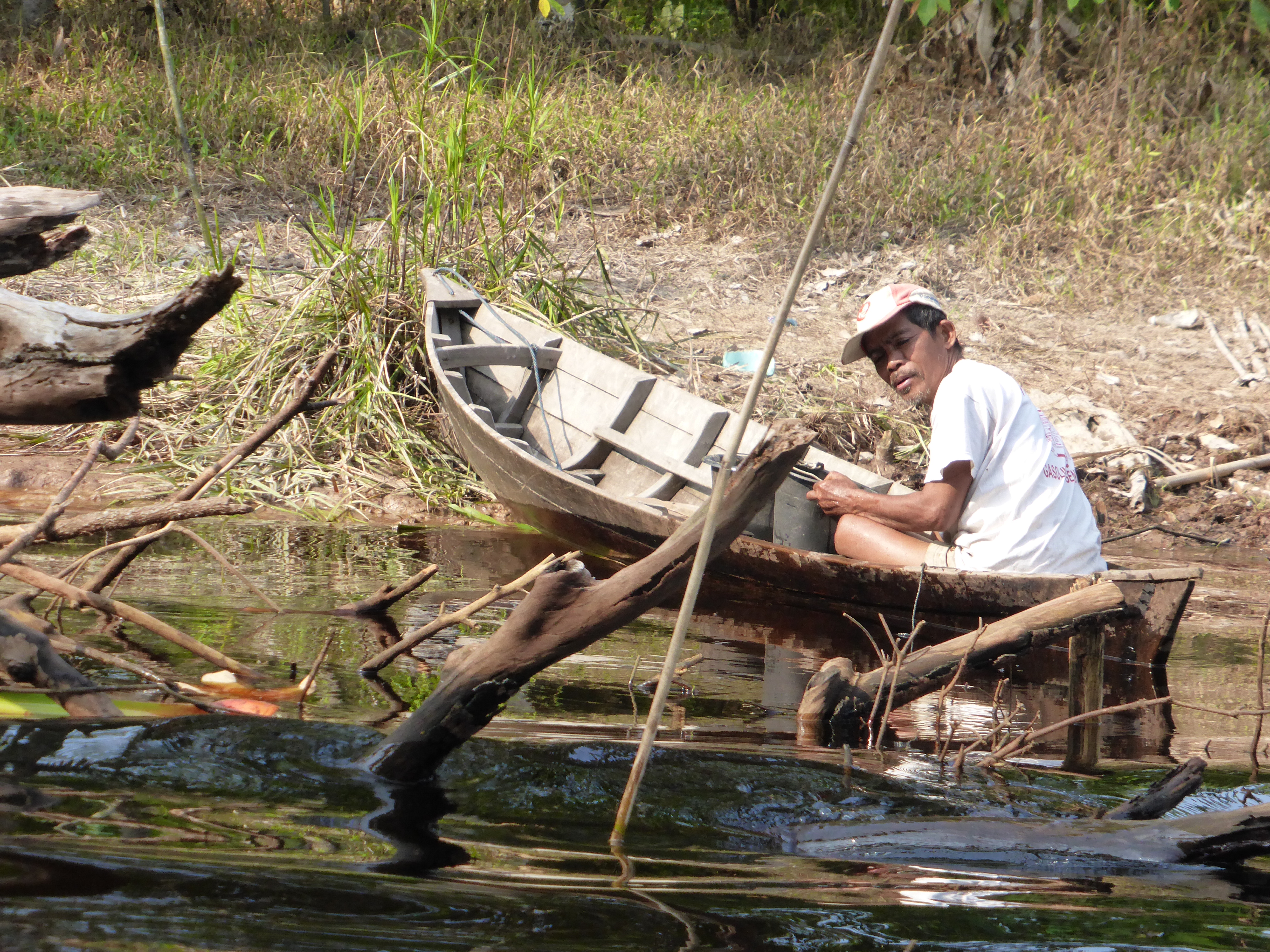
Forest communities vital to conservation (photo by the author, Riau, Sumatra 2014)
TW: Verification. Aren’t we short of credible organisations who can provide this? What’s the solution there?
SP: “There are credible organisations out there but they could do with capacity building. Imagine if the millions paid to auditors over the years, usually foreign, flying in and out, had instead been directed to building capacity in-country.
Some certification bodies do build local capacity but mostly of their own organisations. I believe this has been a real failing of certification schemes.
Grass roots organisations live out in the field where natural resources are managed, where people’s lives are impacted but certification schemes don’t really interact with them, usually only at the ‘stakeholder consultation’ phase of an audit process and then most complain that their views weren’t considered in final audit decisions.
Certification hasn’t done nearly enough to build the capacity of this local governance mechanism and so we need to focus more on that.”
TW: Let’s say your idea, or the idea generally of scaling verifiable impact beyond certification schemes takes off. Where do you think we can get to, realistically in the next 5-10 years? Can VT-TV really transform industries where certification has failed?
SP: “I certainly believe that it can. The next 5-10 years will be interesting but here’s the thing that I really want people to stretch their thinking on. I’m not actually saying that VT-TV is the answer, that it will succeed where certification has failed.
I hope that VT-TV is just part of a broad evolutionary process that will see us doing something else, even more effective in 5-10 years time.
VT-TV might be a distant thought by then as we storm ahead, innovating, growing, thinking and experimenting. For me, it’s not so much about VT-TV though yes, I think it has much more scope to bring change than certification.
It’s about a process based on fundamental human values to tackle the really intense wicked problems we’ve created by our own over-population and our over-consumption. I wrote the book to try to shake people out of the ‘sleep walking to the edge of the cliff’ scenario. The ‘everything’s bad-let’s make a certification scheme’ scenario.
We’ll continue to hurt our brains to come up with new ideas and I hope that, having read “Beyond Certification”, others will too.
Let those worrying about PR wring their hands. There’s more important thinking and work to be done to turn things around.”
Scott’s blog is here. Worth a look.
If you’ve got this far, you might want to come and debate Scott’s views with him in person, at the conference below in a month or so’s time:
How business can tackle deforestation – A make or break issue for Asia’s corporate reputation
28th-29th September 2015, Singapore
With: TFT, Cargill, Asia Pulp & Paper, Unilever, Sime Darby, Neste Oil, Monsanto, UBS, Mars, Greenpeace, WWF, Golden Agri-Resources, UBS, Musim Mas, Rainforest Alliance, Great Giant Pineapple, Forest Peoples Programme and many more. Sponsored by Robertsbridge and Wilmar.
For full agenda and speaker list go here
And here’s a list of other events where we will be debating the pros and cons of certification:
Ethical Trade and Human Rights Forum (with ETI)
Transforming supply chains for responsible business at scale
October 19-20, London – For draft agenda go here, contact Boris.Petrovic@innovation-forum.co.uk
How business can tackle deforestation
Innovation in sustainable forestry: Technology, risk and collaboration
November 2-3 London – For more information go here.
Sustainability: Why current consumer engagement fails – and how to fix it
November 9th-10th 2015, London – For more information go here.
“Sustainable seafood sourcing: How business can manage global risk and collaborate for sustainable improvements“
25th-26th November 2015 in London - For more information go here.
How to engage with – and improve the lives of – smallholder famers
March 2016, London – For draft agenda contact Boris.Petrovic@innovation-forum.co.uk
For general inquiries contact: Charlenne.Ordonez@innovation-forum.co.uk
 I'm Toby Webb, founder of Innovation Forum, a sustainability focused research, publishing and events business. I'm also a lecturer on Corporate Responsibility at Kings College London and at Birkbeck, University of London. Tobias DOT Webb AT innovation-forum.co.uk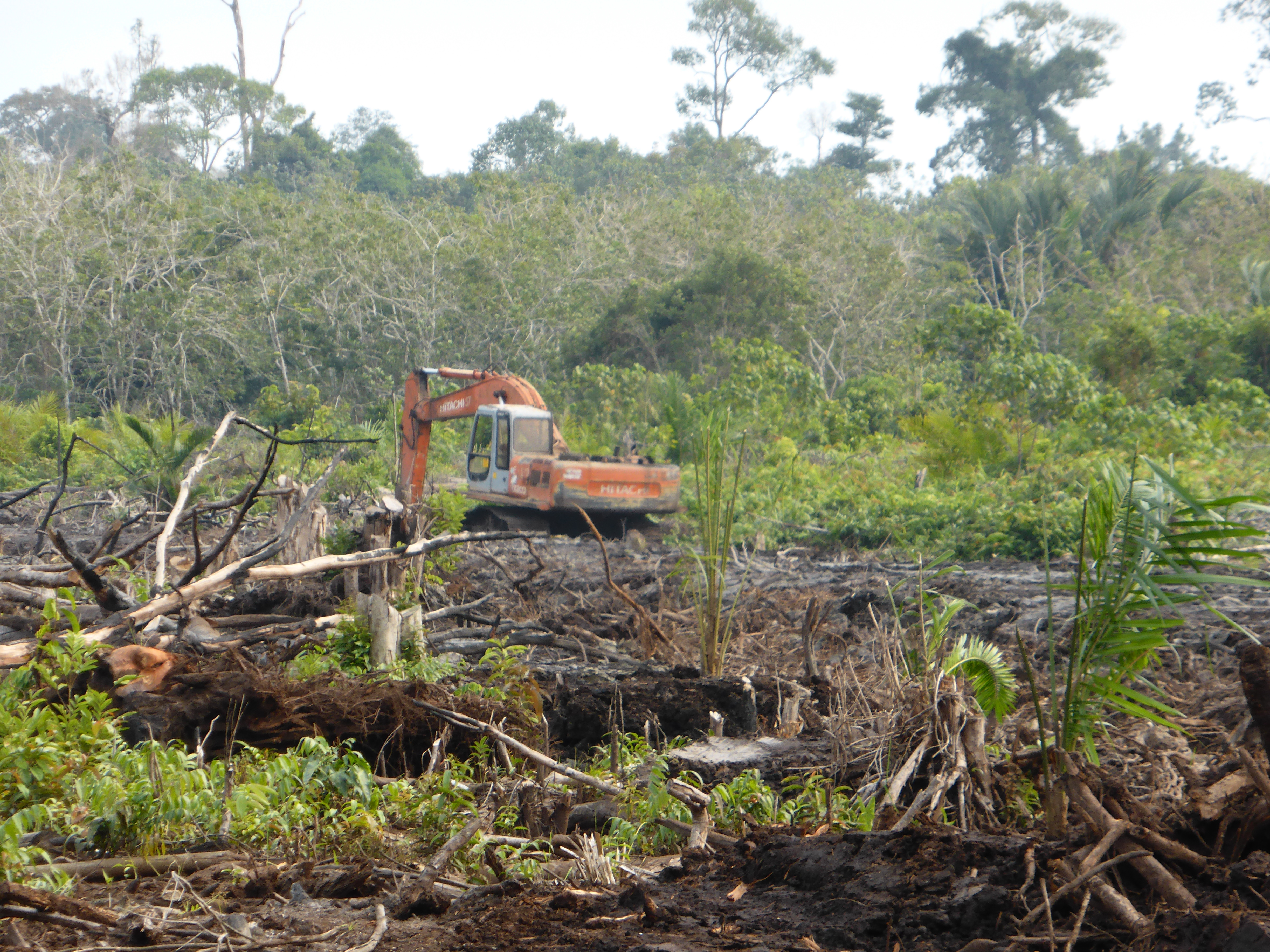
I favour the approach of Oxfam’s Behind The Brands scorecards. Certification programs are a waste of money and human capital. Lack of trust and policing aren’t the way to shake things up. Blogs should speak out more, like you do, about ‘sustainability professionals’ and their ‘safe talk’. As on the work of Oxfam, of course.
Hang on a minute. Please can we make a clearer distinction between NGOs and certification bodies here. These are not the same thing at all and should play differing roles in the process of moving us towards a more sustainable economy.
It is right and proper for an NGO to define what they believe to be the ideal target for us to attain. To do so they may create a standard by which we can measure ourselves. This may try to represent “the end point” or a partial solution.
It is the role of certification to ensure that companies meet the requirements of those standards and help make those requirements useful and relevant to a businesses internal workings. It is not per se the role of a certification body to define or defend the standards created by civil society!
I’m sure there are other ways in which NGOs can encourage change - standards are just one and we surely place too much emphasis on them to claim that certification has failed because we don’t have sustainable businesses yet!!
Schemes like Oxfam’s “behind the brands” scorecards may be more effective - but we would be foolish to not try a number of avenues. Indeed, it would be interesting to see what data is used by Oxfam’s scorecards - no doubt third party assured by the same certification bodies and the like who are involved with RSPO etc.
So the dividing line between certification schemes and comparing performance is not necessarily as stark as you might think.
John : “Despite all the efforts in cocoa at the moment, the core of the problem is still not being addressed; the extreme poverty of cocoa farmers, and their lack of a voice in the debate,” said Antonie Fountain, co-author of the Cocoa Barometer 2015.
And now we have the BBC investigating the plight of workers on tea plantations in India. Rainforest Alliance seems to certify degrading and dangerous conditions on tea estates that supply some of the world’s favourite tea brands.
Totally agree with you: Oxfam should be transparent about what data is used by it’s scorecards. But then again, who bothers?
John, I’ve asked Oxfam about the data. Here’s it’s answer. Cheers.
“In the interests of transparency, we have only assessed publicly available information in the Scorecard. The Scorecard assesses publicly available information that relates to the policies of these companies on their sourcing of agricultural commodities from developing countries. Where companies have relevant policies we have encouraged them to disclose these. We could not assess actual practices on farms and exactly how the Big 10 use their power to shape the behavior of their suppliers, because that information is not publicly available.”